

Top Pipeline Repair Techniques for Oil & Gas Projects in 2026
Introduction
The oil and gas industry continues to evolve rapidly, and with it, the demand for advanced pipeline repair techniques has never been greater. Pipelines are the backbone of energy transportation, and any failure can lead to costly downtime, environmental hazards, and safety risks.
In 2026, modern pipeline repair solutions focus on efficiency, safety, cost-effectiveness, and environmental sustainability. Companies like Greenspan Concepts are leveraging cutting-edge technologies and proven engineering practices to ensure pipelines remain operational and reliable.
In this guide, we’ll explore the top pipeline repair techniques shaping the oil and gas industry today.
Why Pipeline Repair is Critical in Oil & Gas Operations
Pipeline failures can result from:
- Corrosion
- Mechanical damage
- Material defects
- Environmental stress
- Poor maintenance practices
Key Impacts of Pipeline Failure:
- Production downtime
- Financial losses
- Environmental pollution
- Regulatory penalties
- Safety hazards
This is why adopting modern repair techniques is essential for every oil and gas company.
1. Composite Wrap Repair Systems
Overview
Composite wrap repair is one of the most widely used methods in pipeline maintenance today. It involves wrapping damaged sections of a pipeline with high-strength composite materials such as fiberglass or carbon fiber.
Benefits:
- Non-intrusive (no need to shut down operations in some cases)
- Lightweight and durable
- Corrosion-resistant
- Cost-effective
Best Use Cases:
- Corrosion defects
- Minor cracks and leaks
- Reinforcement of weakened sections
2. Clamp and Sleeve Repairs
Overview
Clamp and sleeve repairs involve installing a metal sleeve or clamp around the damaged pipeline section to restore its integrity.
Types:
- Full-encirclement sleeves
- Split sleeves
- Leak repair clamps
Advantages:
- Quick installation
- High strength and reliability
- Suitable for high-pressure pipelines
Ideal For:
- Emergency repairs
- Severe leaks
- Structural reinforcement
3. Pipeline Replacement (Sectional Replacement)
Overview
When damage is extensive, replacing a section of the pipeline is often the safest option.
Process:
- Isolate the damaged section
- Cut and remove the faulty segment
- Install a new pipe section
- Weld and test
Benefits:
- Long-term solution
- Eliminates recurring issues
- Ensures compliance with safety standards
Limitations:
- Higher cost
- Requires downtime
4. Hot Tapping and Line Stopping
Overview
Hot tapping allows technicians to connect to an existing pipeline without shutting it down, while line stopping temporarily isolates a section.
Key Advantages:
- No interruption to operations
- Reduces revenue loss
- Safe and efficient
Applications:
- Pipeline modifications
- Maintenance work
- System upgrades
5. Robotic and Smart Pigging Technology
Overview
Smart pigs (Pipeline Inspection Gauges) are advanced robotic tools used for inspection and minor repairs inside pipelines.
Features:
- Detect corrosion, cracks, and leaks
- Provide real-time data
- Improve predictive maintenance
Benefits:
- Minimizes human risk
- Enhances accuracy
- Supports preventive maintenance strategies
6. Welding and Fabrication Repairs
Overview
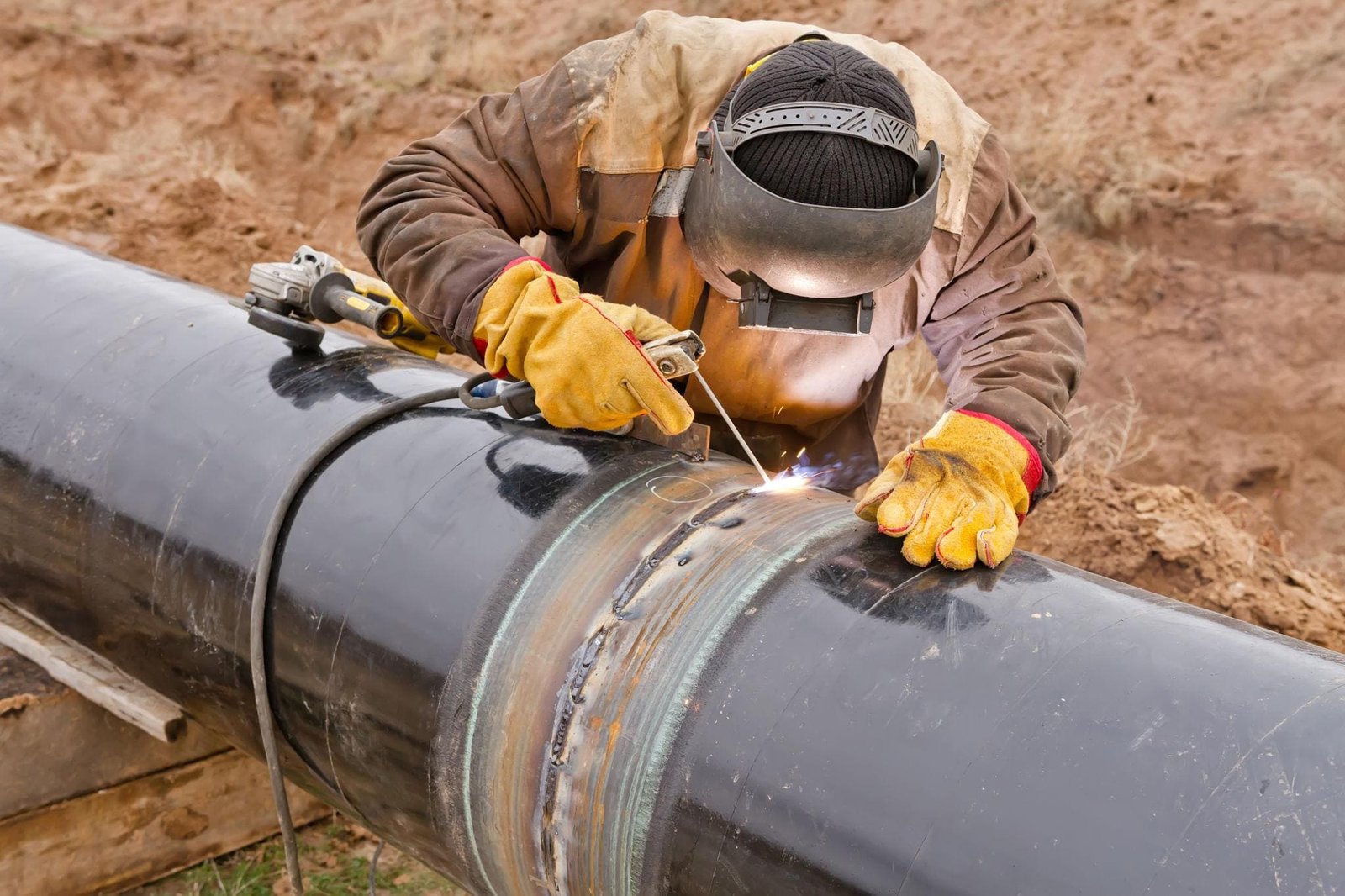
Welding remains a fundamental pipeline repair technique, especially for structural damage.
Types of Welding Used:
- Arc welding
- TIG welding
- MIG welding
Advantages:
- Strong and permanent repair
- Suitable for high-pressure systems
Considerations:
- Requires skilled professionals
- Must meet strict safety standards
7. Corrosion Control and Coating Systems
Overview
Corrosion is one of the leading causes of pipeline failure. Modern repair techniques include applying protective coatings and cathodic protection systems.
Common Methods:
- Epoxy coatings
- Polyurethane coatings
- Cathodic protection
Benefits:
- Extends pipeline lifespan
- Prevents future damage
- Reduces maintenance costs
8. Trenchless Repair Technology
Overview
Trenchless technology allows pipeline repairs without extensive excavation, making it ideal for urban and environmentally sensitive areas.
Techniques Include:
- Horizontal Directional Drilling (HDD)
- Pipe bursting
- Slip lining
Advantages:
- Minimal environmental disruption
- Faster project completion
- Lower restoration costs
9. Leak Detection and Sealing Technologies
Overview
Advanced leak detection systems help identify issues early, while modern sealing techniques fix leaks quickly.
Technologies:
- Acoustic sensors
- Fiber optic monitoring
- Chemical sealants
Benefits:
- Early detection reduces damage
- Improves safety
- Enhances operational efficiency
10. Preventive Maintenance Strategies
Overview
Prevention is better than repair. In 2026, companies are investing heavily in predictive and preventive maintenance.
Key Practices:
- Regular inspections
- Data-driven maintenance scheduling
- Use of AI and IoT monitoring systems
Benefits:
- Reduces unexpected failures
- Saves costs long-term
- Improves system reliability
How Greenspan Concepts Delivers Excellence in Pipeline Repair
At Greenspan Concepts, we combine:
- Experienced field engineers
- Modern repair technologies
- Strict safety compliance
- Efficient project execution
Our approach ensures that every pipeline repair project is handled with precision, durability, and environmental responsibility.
Conclusion
The future of pipeline repair in the oil and gas industry is driven by innovation, efficiency, and sustainability. From composite wraps to robotic inspections, these advanced techniques are transforming how pipelines are maintained and repaired.
By adopting these modern solutions, companies can:
- Minimize downtime
- Improve safety
- Extend pipeline lifespan
- Reduce operational costs