

The Role of Technology in Modern Pipeline Inspection and Maintenance
Introduction
The oil and gas industry is undergoing a major transformation driven by advanced technology and digital innovation. Traditional pipeline inspection and maintenance methods are no longer sufficient to meet the demands of modern operations.
Today, companies rely on smart technologies, automation, and data-driven systems to ensure pipelines remain safe, efficient, and reliable. For organizations like Greenspan Concepts, leveraging these technologies is key to delivering world-class pipeline services.
In this article, we explore the critical role technology plays in modern pipeline inspection and maintenance.
Why Technology is Essential in Pipeline Operations
Pipelines often span long distances and pass through challenging terrains, making manual inspection difficult and inefficient.
Key Challenges Solved by Technology:
- Limited accessibility in remote areas
- Delayed detection of faults
- High operational risks
- Inefficient maintenance processes
Modern technology addresses these challenges by enabling real-time monitoring, accurate diagnostics, and predictive maintenance.
1. Smart Pigging Technology (Pipeline Inspection Gauges)
Overview
Smart pigging is one of the most advanced inspection techniques used in pipelines today. It involves sending intelligent devices (known as “pigs”) through pipelines to collect data.
What Smart Pigs Detect:
- Corrosion
- Cracks and leaks
- Metal loss
- Pipeline deformation
Benefits:
- High accuracy
- Real-time data collection
- Reduced need for manual inspection
2. Drone Technology for Pipeline Inspection
Overview
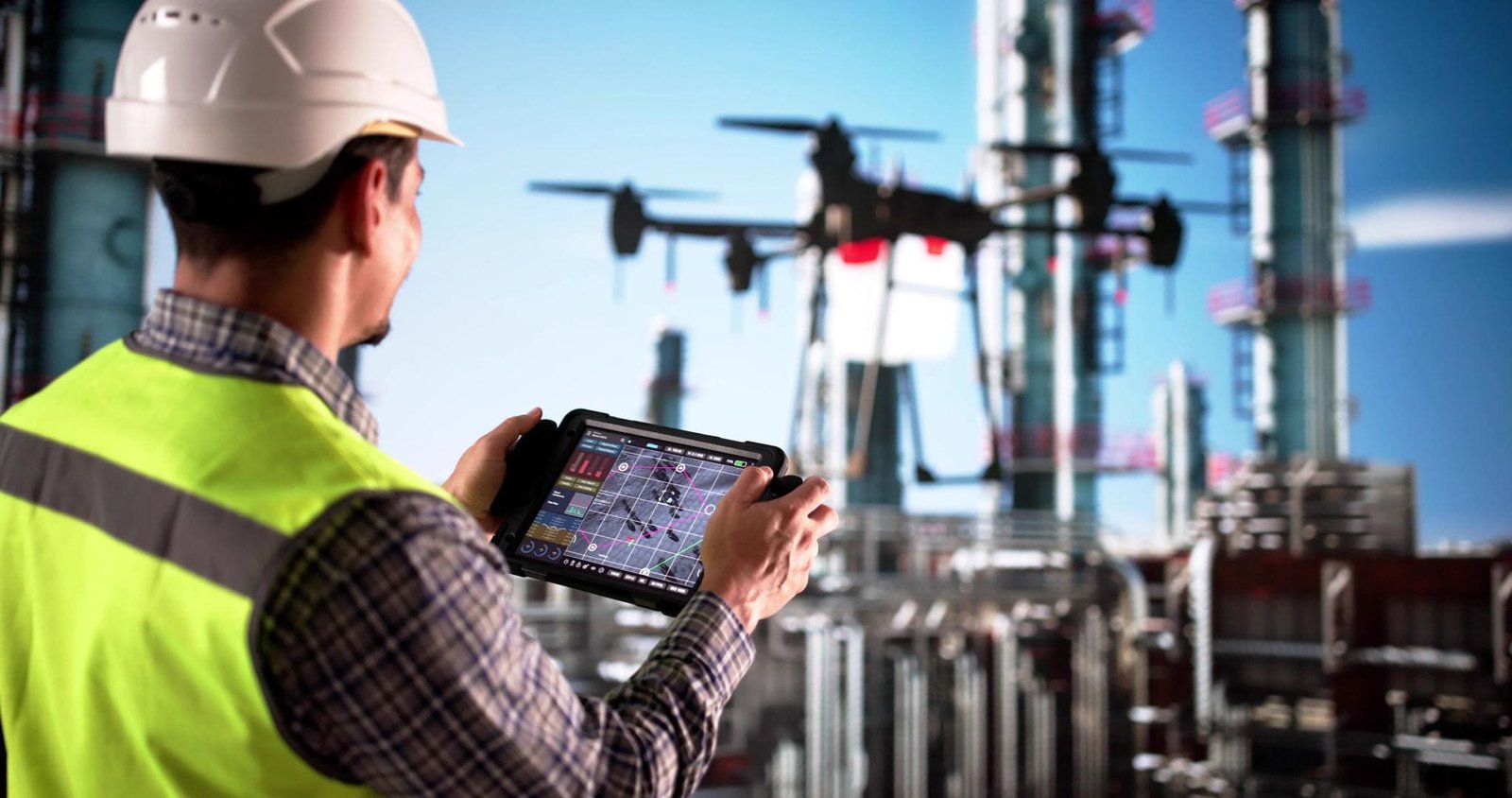
Drones (Unmanned Aerial Vehicles – UAVs) are increasingly used to inspect pipelines, especially in hard-to-reach or hazardous areas.
Applications:
- Aerial surveillance
- Leak detection
- Monitoring construction and maintenance projects
Advantages:
- Faster inspections
- Improved safety
- Reduced operational costs
3. Internet of Things (IoT) in Pipeline Monitoring
Overview
The Internet of Things (IoT) connects sensors and devices to monitor pipeline conditions continuously.
What IoT Sensors Monitor:
- Pressure levels
- Temperature
- Flow rate
- Vibration
Benefits:
- Real-time alerts
- Early fault detection
- Improved decision-making
4. Artificial Intelligence (AI) and Predictive Maintenance
Overview
AI is transforming pipeline maintenance by analyzing data and predicting potential failures before they occur.
Key Capabilities:
- Pattern recognition
- Failure prediction
- Automated diagnostics
Benefits:
- Prevents unexpected breakdowns
- Reduces maintenance costs
- Enhances operational efficiency
5. SCADA Systems (Supervisory Control and Data Acquisition)
Overview
SCADA systems are widely used to monitor and control pipeline operations from a central location.
Features:
- Real-time data visualization
- Remote control of pipeline systems
- Automated alerts and responses
Benefits:
- Improved system control
- Faster response to issues
- Increased operational reliability
6. Fiber Optic Monitoring Systems
Overview
Fiber optic cables are installed along pipelines to detect changes in temperature, vibration, and sound.
Applications:
- Leak detection
- Intrusion detection
- Structural monitoring
Advantages:
- High sensitivity
- Continuous monitoring
- Accurate fault detection
7. Robotics and Automated Inspection Tools
Overview
Robotic systems are used to inspect pipelines internally and externally, reducing the need for human intervention.
Examples:
- Crawling robots
- Submersible inspection robots
- Automated welding systems
Benefits:
- Increased safety
- Access to confined spaces
- High precision inspections
8. Geographic Information Systems (GIS)
Overview
GIS technology helps map and analyze pipeline routes and surrounding environments.
Uses:
- Pipeline mapping
- Risk assessment
- Environmental monitoring
Benefits:
- Better planning
- Improved risk management
- Enhanced decision-making
9. Digital Twins Technology
Overview
A digital twin is a virtual replica of a physical pipeline system, allowing engineers to simulate conditions and predict outcomes.
Advantages:
- Real-time system modeling
- Scenario testing
- Improved maintenance planning
10. Cloud Computing and Data Analytics
Overview
Cloud platforms store and process large amounts of pipeline data, enabling advanced analytics.
Benefits:
- Centralized data access
- Scalable storage
- Faster data processing
How Greenspan Concepts Leverages Technology
At Greenspan Concepts, we integrate modern technologies into our operations to deliver:
- Accurate pipeline inspections
- Data-driven maintenance strategies
- Faster response times
- Improved safety and compliance
Our use of technology ensures clients benefit from efficient, reliable, and cost-effective pipeline solutions.
Benefits of Using Technology in Pipeline Maintenance
1. Improved Safety
Technology reduces human exposure to hazardous environments.
2. Cost Efficiency
Early detection of issues prevents expensive repairs.
3. Increased Reliability
Continuous monitoring ensures pipelines operate smoothly.
4. Environmental Protection
Advanced systems help prevent leaks and spills.
Future Trends in Pipeline Technology
Looking ahead, the industry is expected to adopt:
- More AI-driven automation
- Advanced robotics
- Enhanced real-time monitoring systems
- Sustainable and eco-friendly technologies
Conclusion
Technology is revolutionizing pipeline inspection and maintenance in the oil and gas industry. From smart pigging to AI-powered analytics, these innovations are helping companies operate more safely and efficiently.
By embracing these technologies, companies like Greenspan Concepts are setting new standards in pipeline management—ensuring long-term reliability, reduced costs, and improved environmental protection.